What SHAPE is your career?


One thing I've noticed in coaching conversations recently is how often people feel the need to explain the shape of their career.
Not explicitly. But in the way they tell the story.
"It's not exactly a conventional career path."
"I was only there for eight months."
"I know my CV jumps around a bit."
"Then I moved to Spain, which kind of threw everything off."
"I don't really count those years."
These comments are often woven so naturally into the story that they're easy to miss. But they can reveal a great deal about the expectations people are carrying around their career.
Because underneath the explanation is usually an assumption: that their career should have unfolded differently.
Straighter.
Tidier.
More stable.
And as I listen, I often find myself wondering: What shape are they comparing their career to?
The one they imagined when they graduated? The one their parents had? The one their university friends seem to be following? The one LinkedIn keeps showing them?
Because most of us carry an idea of what a successful career should look like, even if we've never consciously put it into words.
If I asked you to draw that image on a piece of paper, I suspect many people would sketch a line steadily rising from left to right.
Study hard. Gain experience. Get promoted. Earn more money. Become more successful. Feel more fulfilled. Retire and relax. A nice, neat, predictable progression.

As Gen-Xers, it's often the kind of career our parents had. The problem is that very few careers actually look like that nowadays.
The Reality of Modern Career Paths
If you've come across Helen Tupper and Sarah Ellis's Squiggly Careers podcast, you'll already be familiar with the idea that careers are no longer ladders.
For many of us, careers now involve pivots, career breaks, retraining, relocation, redundancy, self-employment and complete changes of direction.
Others are building portfolio careers, combining different types of work rather than following a single professional path.
And yet many of us are still judging ourselves against the ladder.
A few years ago, while working with a coach, I described my own career as a deflated ball
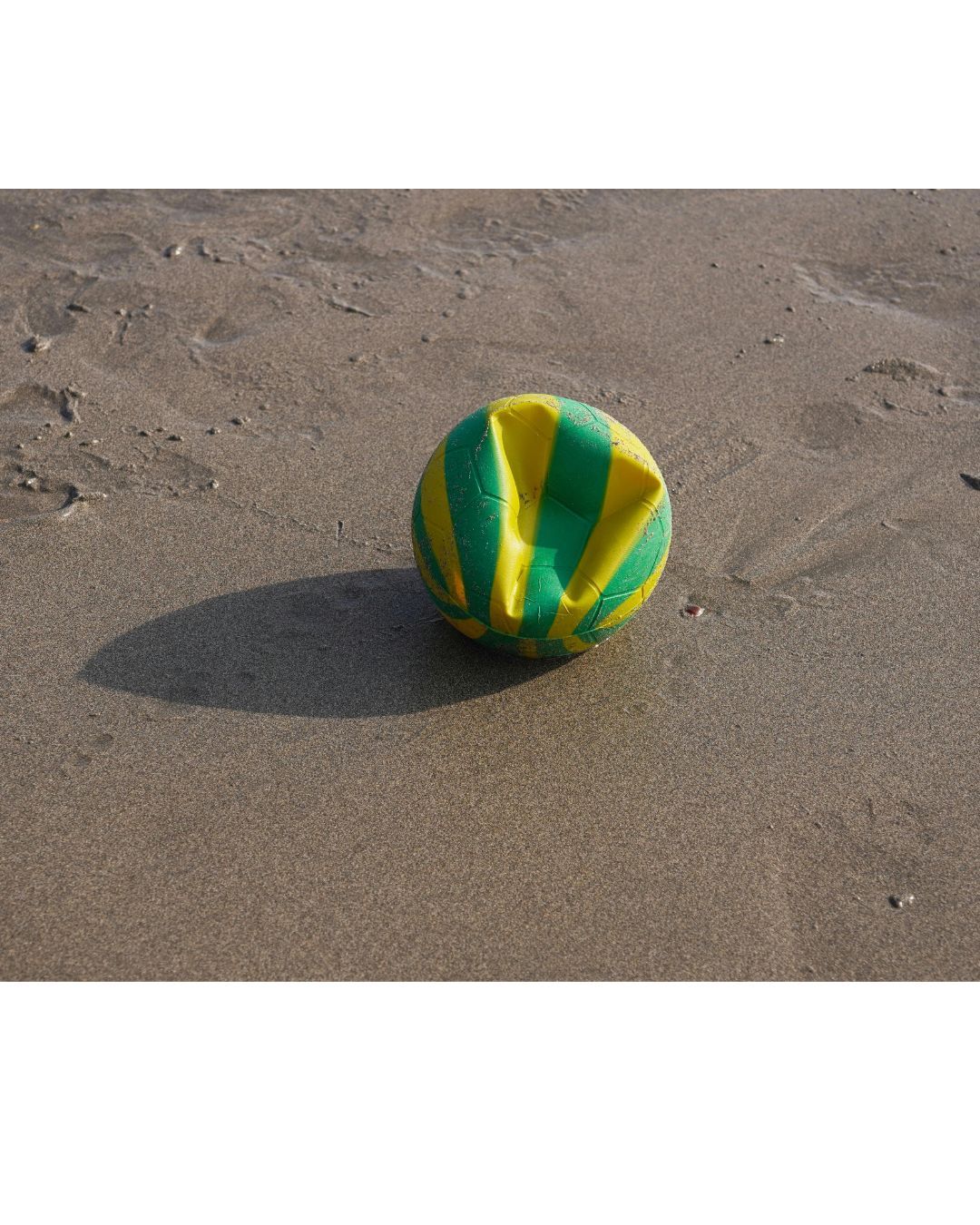
At the time, I was retraining as a coach after spending thirteen years building a successful translation business. Intellectually, I knew I wasn't starting from scratch. But emotionally, it felt that way.
Looking back, I don't think I was really describing my career.
I was describing the gap between the career I thought I should have by that point, in my early 40s, and the reality I was living.
Different Career Paths Are Not a Problem to Solve
The more I think about it, the more I see that careers come in all sorts of shapes.
Some look like ladders.
Some look like squiggles.
Some resemble an irregular staircase, with long periods that seem static followed by sudden leaps forward.
Some feel more like a plateau. From the outside, not much appears to be happening. But beneath the surface, experience, confidence and perspective are quietly accumulating.
Some are portfolio careers, made up of different projects, roles and identities.
And some, at least temporarily, feel like deflated balls. Not broken. Not finished. Just waiting to take shape.
None of these shapes is inherently better than another.
The difficulty arises when we're living one shape but judging ourselves against another.
Why We Feel Uncomfortable About Career Changes, Gaps and Detours
This is something I see frequently in coaching conversations.
People often feel uncomfortable about gaps on their CV.
Or short stays in roles.
Or career changes that didn't work out.
Or years spent abroad.
Or qualifications they never used.
Or periods spent raising children.
Not because they regret those decisions, but because they worry about what those decisions say about them.
Recently, I spoke to someone who described a series of jobs she'd left after six to nine months.
None of them had been right for her.
Some weren't what she'd expected.
Others had cultures that didn't align with her values.
Yet as she talked, I noticed a sense of discomfort.
Almost as though leaving was the thing that required explanation.
As though staying would somehow have been the more "successful" choice.
But when I listened to her story, I noticed something different.
Someone who was paying attention.
Someone who was learning what mattered to her.
Someone who was becoming increasingly clear about the type of work, leadership and environment she wanted around her.
The facts were exactly the same. The interpretation was different.
And I think that's true for many of us.
The shape isn't usually the problem.
The story we're attaching to the shape often is.

The Career Comparison Trap
Part of the reason those stories can feel so convincing is that we're rarely evaluating our careers in isolation.
We're comparing them.
To the classmates we went to school with.
The friends we studied alongside at university.
The colleagues who joined the graduate scheme at the same time.
The people we occasionally look up on LinkedIn.
We compare job titles.
Levels of seniority.
Salaries.
And often, without realising it, we're comparing completely different lives.
Different priorities. Different constraints. Different definitions of success.
One person prioritised stability.
Another prioritised adventure.
One moved abroad.
Another stepped back to raise children.
One changed career entirely.
Another stayed on the same path for twenty years.
The shapes were never going to be the same.
And yet we often use someone else's career to question the choices we've made in our own.
The Difference Between the Shape and the Story
The question isn't whether your career looks exactly as you imagined when you graduated.
Or when you were twenty-five.
Or even five years ago.
The question is whether you're still judging yourself against a shape you imagined back then.
A shape that may never have been realistic.
Or relevant.
Or even yours.
Because careers aren't static.
Neither are people.
We grow.
Our priorities change.
Life happens.
And sometimes the most useful thing we can do is stop measuring ourselves against a shape we didn't even realise we drew.
A Question for Reflection
If you were to draw the shape of your career today, what would it look like?
How does that compare with the shape you expected it to have?
And what story are you telling yourself about the difference?
Perhaps the question isn't:
"Why doesn't my career look the way I thought it would?"
Perhaps the more useful question is:
"What does the shape of my career tell me about what I've valued, prioritised and experienced along the way?"
Because viewed through that lens, the shape itself often starts to make a lot more sense.
Career Coaching for Professionals at a Crossroads
If your reality no longer matches the expectations you once had for your career, you're not alone.
Many of the people I work with are experienced professionals who look successful on paper but feel like something is off.
Whether you're considering a career change, questioning a role that no longer fits, struggling with confidence at work or wondering what comes next, coaching can help you step back, see the bigger picture and move forward with greater clarity and confidence.
If this has struck a chord, I'd love to hear from you.
Book a free 30-minute discovery call and let's explore what's feeling off for you and what your next chapter could look like.
👉 https://calendly.com/carmel-drake/discovery-call