How Well Are Your Boundaries Actually Working for You?


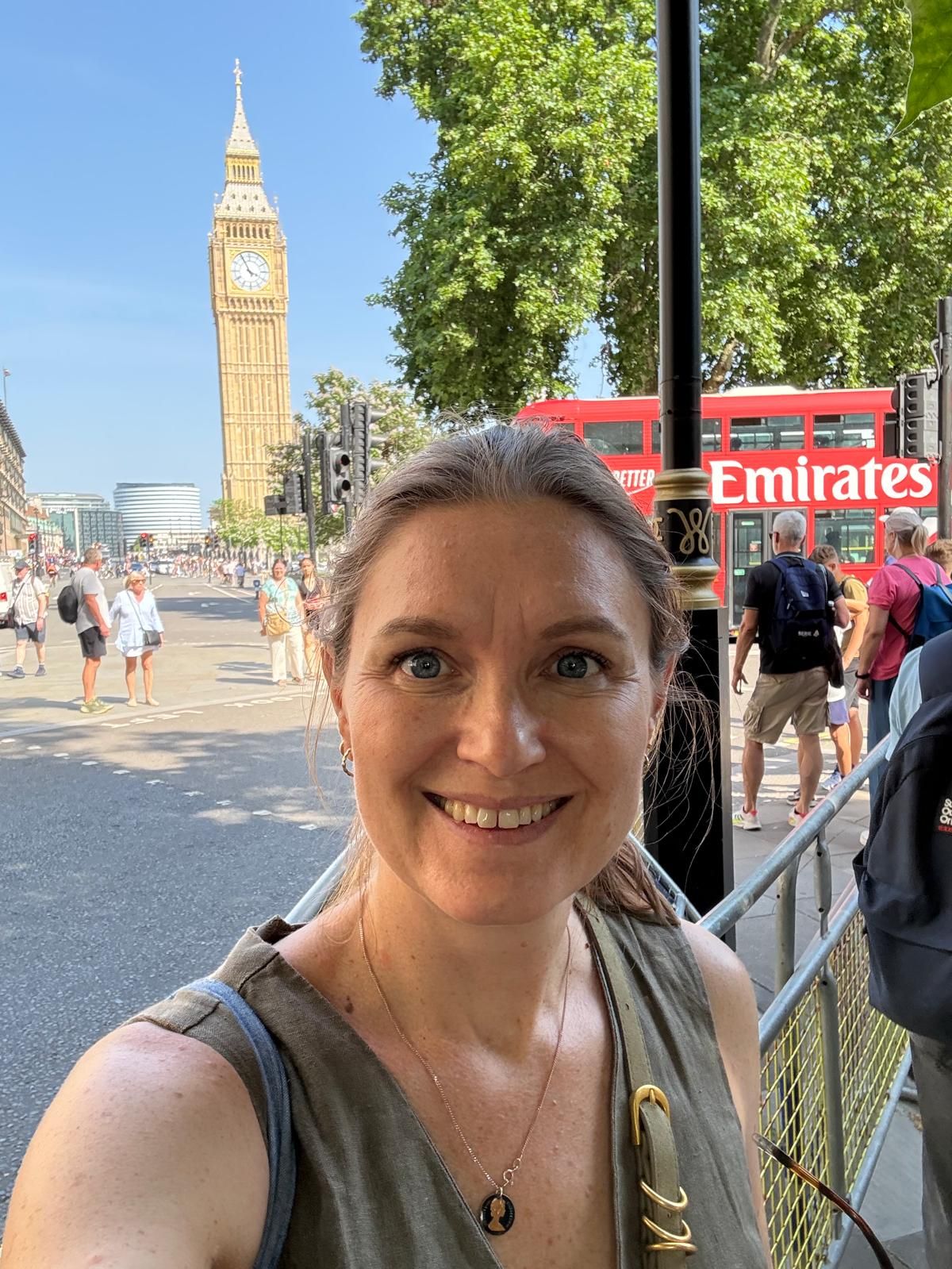
I just got back from a 16-day trip to the UK - my fifth annual visit with my daughters. We stayed in seven different places and saw a lot of friends and family. I don't know anyone who does a trip quite like this.
Before I had children, I used to go back to the UK five or six times a year to visit friends and family, and for special occasions. Now it's become one big annual trip. It's a very different way of going "home".
Anyway. All that catching up and talking has given me a lot to reflect on. And this year, for some reason, I came back thinking about boundaries.
Perhaps it's because they're something I struggle with myself. I often find it difficult to know when I've done enough. And I see the same thing come up again and again with my coaching clients.
But spending time with so many different people in such a short space of time also made me realise quite how differently we all do this stuff.
Not in a particularly scientific way. And not because I was secretly analysing all my friends ahead of drafting this blog post. I just found myself noticing.
Some people seem to have very clear lines. Others prefer blur. Others still are wonderful at compartmentalising.
Some people will happily close their laptop with work unfinished. Others never feel they've done enough. Some work at the breakfast table while their children play in the garden. Some work at weekends. Some just get on with it. Others agonise over it - feeling guilty if they work and guilty if they don't. Sometimes apologising for it. Sometimes doing it without anyone else even noticing.
If I wanted to exaggerate, I'd say that I noticed two types of people: those who don't seem to fret at all about unfinished work, and those who let work (unfinished or otherwise) creep into every area of their lives.
And there doesn't seem to be any correlation with "success". Those who seem able to switch off are just as successful as those who work for hours at the weekend before anyone else wakes up.
Which has made me question my own assumption that there is a "right" way to do boundaries.
I'm increasingly convinced that there isn't. What's important is whether the boundaries you draw genuinely work for you.
Why is setting boundaries so hard?
Of course, knowing that and actually setting boundaries are two very different things. Especially, I think, if you're a people pleaser. Or a perfectionist. Or someone with a strong sense of responsibility. Or all three.
Because there is nearly always more you could do. Another email you could answer. Another decision you could make. Another person you could help. Something else you could squeeze in.
For me, the same is true at home. I find being at home quite stressful sometimes because everywhere I look there is a job to do. Washing to put away. A cupboard to declutter. New shoes to buy. A car seat to sell. There is always something. If I'm waiting until everything is done before I allow myself to stop, then I never will.
Work is no different. For many of us, "enough" is a very slippery concept.
I see this come up in coaching all the time.
Someone is overwhelmed at work. They know they need better boundaries. But often there isn't one enormous boundary violation . It's more of a slow creep. The pattern has been created through dozens of tiny moments: accepting another task without identifying what should be deprioritised, replying immediately, solving problems that perhaps should have been delegated or not telling anyone they're struggling because they don't want to let anyone down.
None of those decisions seems particularly significant on its own. But repeat them often enough and they become a pattern. Eventually, that pattern becomes your normal way of working.
The difficult bit isn't always saying no
I think we often talk about boundaries as though the main problem is not knowing what to say. Sometimes it is. But often we know perfectly well what we'd like to say: I can't take that on. I don't have time this week. I need someone else (ideally another me) to do this. I'm leaving now. I don't want to.
For me, at least, the harder part is often what comes afterwards.
What if they think I'm difficult? What if they're disappointed? What if I look uncommitted? What if nobody else does it? And what do I do with the guilt?
For people pleasers in particular, setting a boundary can feel uncomfortable because, well, sometimes it is. Someone might be disappointed. Someone might be annoyed. The work might not get done. You might close your laptop knowing there are still 87 things on your to-do list.

And I wonder whether this is where the real work is. Not finding the perfect words that allow us to set a boundary without anyone being inconvenienced, disappointed or annoyed, but becoming more able to tolerate the fact that sometimes they might be.
It reminds me of something I've learnt from Dr Becky Kennedy's approach to parenting: a parent's job is not to keep their children happy 24/7, but to help them learn to tolerate frustration, disappointment and "no". Which means, as parents, we have to learn to tolerate their frustration and disappointment too.
Maybe demanding bosses, teams and clients aren't so different.
Small decisions add up
So, if our boundaries aren't working for us, how do we change them?
We tend to think about changing our lives in terms of big decisions. Quit the job. Move country. End the relationship. Start a side hustle. Go back to university.
And, of course, those decisions typically do change everything. But increasingly, through my own life and my work as a coach, I'm interested in the cumulative effect of the much smaller decisions we make every day.
Because most of our patterns weren't created overnight. They were built gradually, often without us really noticing. So perhaps that's how we change them too.
A boundary can be as small as not replying immediately. Asking for help. Leaving something unfinished. Not automatically moving your plans when something else comes up. None of these things is particularly dramatic, but perhaps that's the point.
If small decisions can gradually create a life that isn't working for us, they can also help us create one that works better.
A small boundary audit
As you may know, I started out my professional life as an auditor. So, here's a small boundary audit.
For the next week, start to notice:
What do I keep saying yes to? What do I keep moving or cancelling? Where am I automatically available? What do I resent? What gets the best of my time and energy? What gets whatever is left?
And perhaps the biggest question of all:
If I repeated this week's decisions for the next five years, where would they take me?

I'm not suggesting we all need to draw hard lines around every part of our lives. Sometimes I work when my children are around or answer messages outside my working hours. Sometimes work spills over because I want it to.
The point, for me, isn't to have perfect boundaries. It's to notice whether the boundaries you have - clear, blurry or somewhere in between - are helping you live the life you actually want.
And if they're not, perhaps you don't need to start with one enormous, brave decision.
Perhaps you start with one small one.
If you know that the way you're doing things isn't working for you and you'd like some help figuring out what needs to change, I'd love to hear from you.
Book a free 30-minute discovery call and let's explore what feels off, what you want to be different and the small decisions that could start to move you in that direction.
👉 https://calendly.com/carmel-drake/discovery-call